
Mon to Sat 07 am to 06 pm
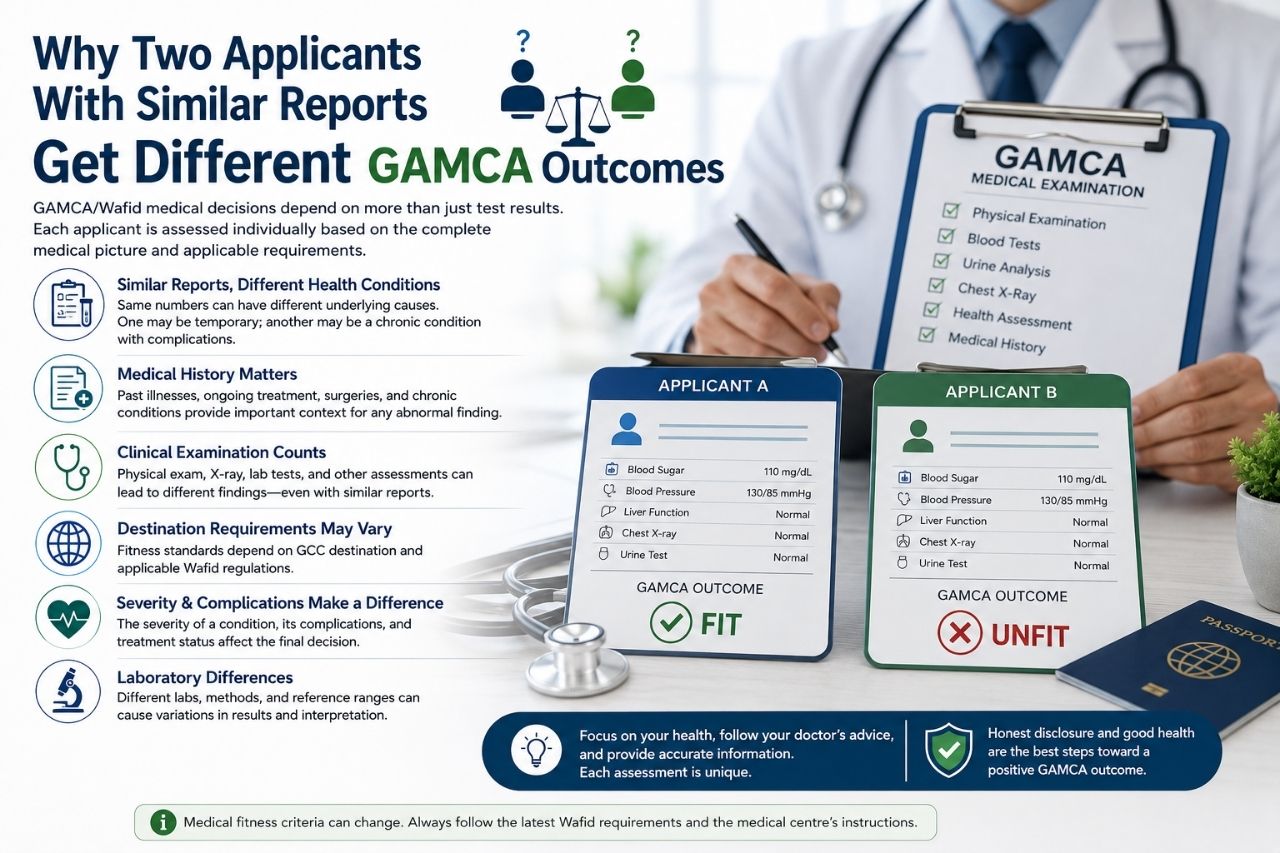
Applicants undergoing a GAMCA medical examination may sometimes be surprised when two people with apparently similar medical reports receive different fitness outcomes. This can happen because the GAMCA/Wafid assessment is not based on one laboratory result alone. The final decision may depend on the applicant’s overall health, clinical examination, medical history, test interpretation, and the requirements applicable to the destination country and intended employment.
Two applicants may have similar blood sugar, blood pressure, liver-function, or other laboratory results, but the underlying health circumstances can be different. One person may have a temporary abnormal result, while another may have an established chronic condition or related complications.
For example, two applicants could have elevated blood glucose levels, but one may have a documented history of diabetes and associated complications while the other may simply have an isolated abnormal reading requiring confirmation.
The examining physician may consider relevant medical history alongside current test results. Previous illnesses, ongoing treatment, surgeries, chronic conditions, or other significant medical information can provide context for an abnormal finding.
This is why applicants should provide accurate information when asked about their medical history rather than relying solely on the numbers shown in their laboratory reports.
GAMCA/Wafid screening involves more than blood tests. Depending on the examination requirements, applicants may undergo physical examination, laboratory testing, chest imaging, and other assessments.
Consequently, two applicants with comparable laboratory results may receive different outcomes if other parts of their examinations produce different findings.
Medical-fitness requirements can depend on the GCC destination and applicable Wafid regulations. The same medical finding may therefore need to be interpreted within the specific requirements governing the applicant’s examination.
Applicants should avoid assuming that another person’s result guarantees the same outcome for them.
A medical condition is not necessarily assessed simply as “present” or “absent.” Its severity, complications, treatment status, and potential impact on fitness for work may be relevant.
For instance, a controlled chronic condition without significant complications may be viewed differently from the same condition when it is poorly controlled or associated with organ damage.
Small variations between test results do not necessarily indicate a meaningful difference in health. Laboratories can have different reference ranges, testing methods, and measurement variations. The physician therefore considers the result in its proper clinical context rather than relying on a single number in isolation.
If a result appears inconsistent or unexpectedly abnormal, additional testing may sometimes be recommended.
If you are preparing for a GAMCA/Wafid examination, focus on accurate medical information rather than trying to match another applicant’s results. Follow your doctor’s treatment plan, comply with the medical centre’s preparation instructions, and keep relevant prescriptions and medical reports available.
Most importantly, an apparently similar report does not necessarily guarantee an identical medical outcome. Each applicant is assessed individually based on the complete medical picture and the applicable fitness requirements.
Note: Medical fitness criteria can change, so applicants should rely on the current Wafid requirements and the medical centre’s instructions for their specific examination.