
Mon to Sat 07 am to 06 pm
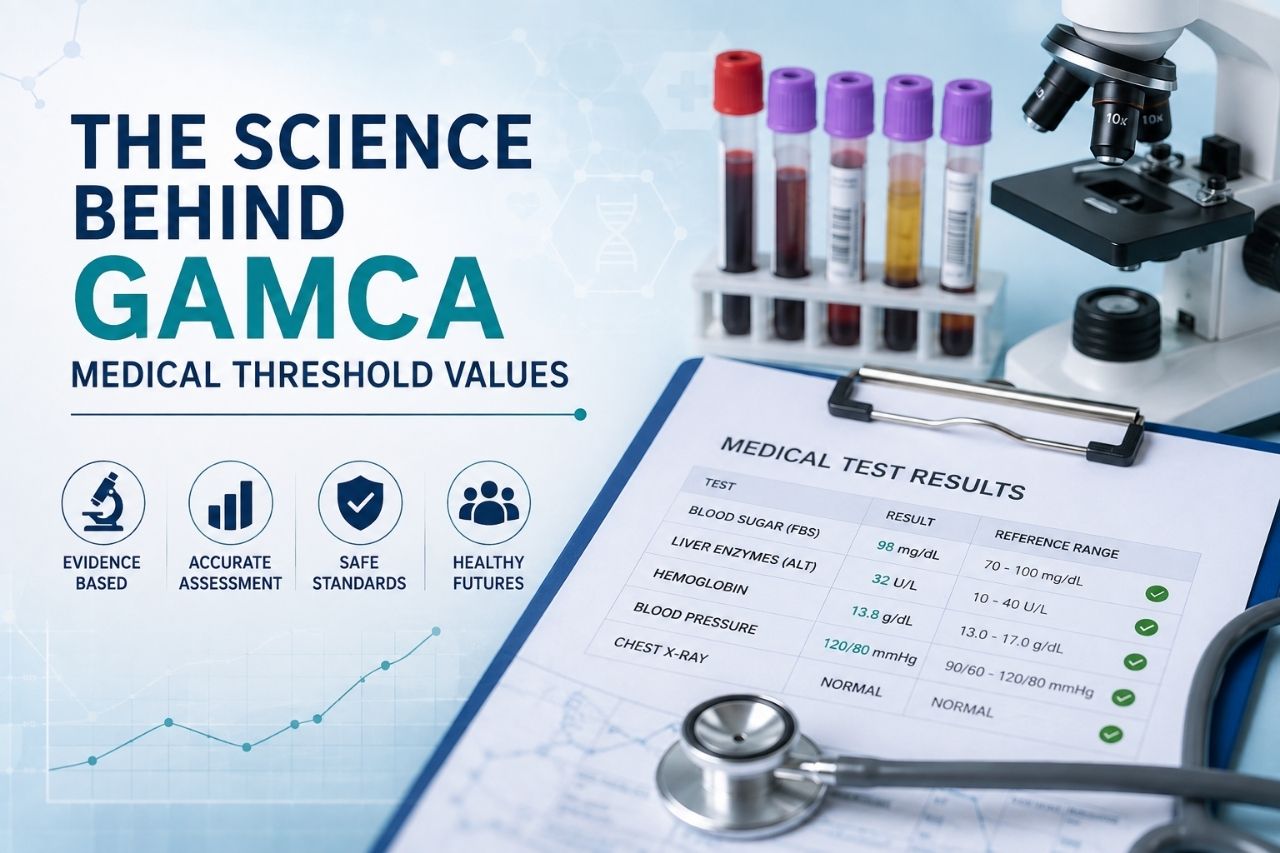
The GAMCA medical examination plays an important role in determining whether individuals are medically fit to work and reside in GCC countries. During the examination, applicants undergo several tests, including blood investigations, urine analysis, chest X-rays, physical examinations, and other assessments depending on the applicable requirements. The results are evaluated against established medical threshold values to determine overall fitness.
But what is the science behind these limits, and why can a small difference in a test result sometimes lead to additional medical evaluation?
Medical threshold values are reference points used by healthcare professionals to identify results that may require further investigation. These values are generally developed using medical research, population data, clinical evidence, and public-health considerations.
In a GAMCA or Wafid medical examination, these thresholds help medical professionals identify potentially significant health conditions that could affect an applicant’s ability to work safely or could present public-health concerns.
A threshold should not always be viewed as a simple “fit” or “unfit” line. Medical professionals may consider the overall clinical picture, especially when a result is borderline.
The primary purpose of medical screening is to identify conditions that are relevant to occupational health and public health. GCC medical screening therefore evaluates several aspects of an applicant’s health.
For example, blood tests can identify certain infections or abnormalities, while chest imaging may help detect findings that require further assessment. Other examinations may evaluate general physical fitness and the presence of significant medical conditions.
Using standardized criteria helps ensure that applicants are assessed according to established medical requirements rather than personal interpretation alone.
Medical test results naturally fluctuate. Factors such as fasting, hydration, stress, recent illness, medication, physical activity, and the timing of the test can influence certain measurements.
For example, a person’s blood sugar or blood pressure may vary between two different days. Similarly, liver enzyme levels can change because of several temporary or underlying factors.
This is why a result close to a reference value may sometimes require confirmation or additional evaluation instead of immediately producing a final conclusion.
It is important to understand that a laboratory reference range and a GAMCA medical fitness criterion are not necessarily the same thing.
A laboratory reference range generally describes expected values within a particular testing population and methodology. Medical fitness criteria, on the other hand, are established for a specific screening purpose.
Consequently, an applicant should not assume that being slightly outside a laboratory’s normal range automatically means they will receive an “Unfit” result.
Medical fitness decisions are generally based on the overall assessment rather than one number in isolation. A healthcare professional may consider laboratory findings alongside physical examination results, imaging, medical history, and any additional investigations that are required.
This approach is particularly important when an applicant has a borderline GAMCA medical report. Additional testing may help determine whether an abnormal finding is temporary, insignificant, or associated with an underlying medical condition.
Applicants should follow the instructions provided by their authorized medical centre before the examination. Getting adequate rest, following fasting instructions where applicable, taking prescribed medication as advised, and providing accurate medical information can help ensure reliable testing.
Most importantly, applicants should avoid attempting to artificially change their test results. The purpose of medical screening is to provide an accurate assessment of health and medical fitness.
The science behind GAMCA medical threshold values is based on standardised medical assessment, clinical evidence, and public-health considerations. These values help healthcare professionals identify results that may need further evaluation while supporting a consistent approach to medical screening.
A borderline result does not necessarily mean an applicant is medically unfit. The final assessment depends on the applicable GCC requirements and the complete medical evaluation. Understanding how medical thresholds work can help applicants approach their GAMCA medical test with greater confidence and realistic expectations.