
Mon to Sat 07 am to 06 pm
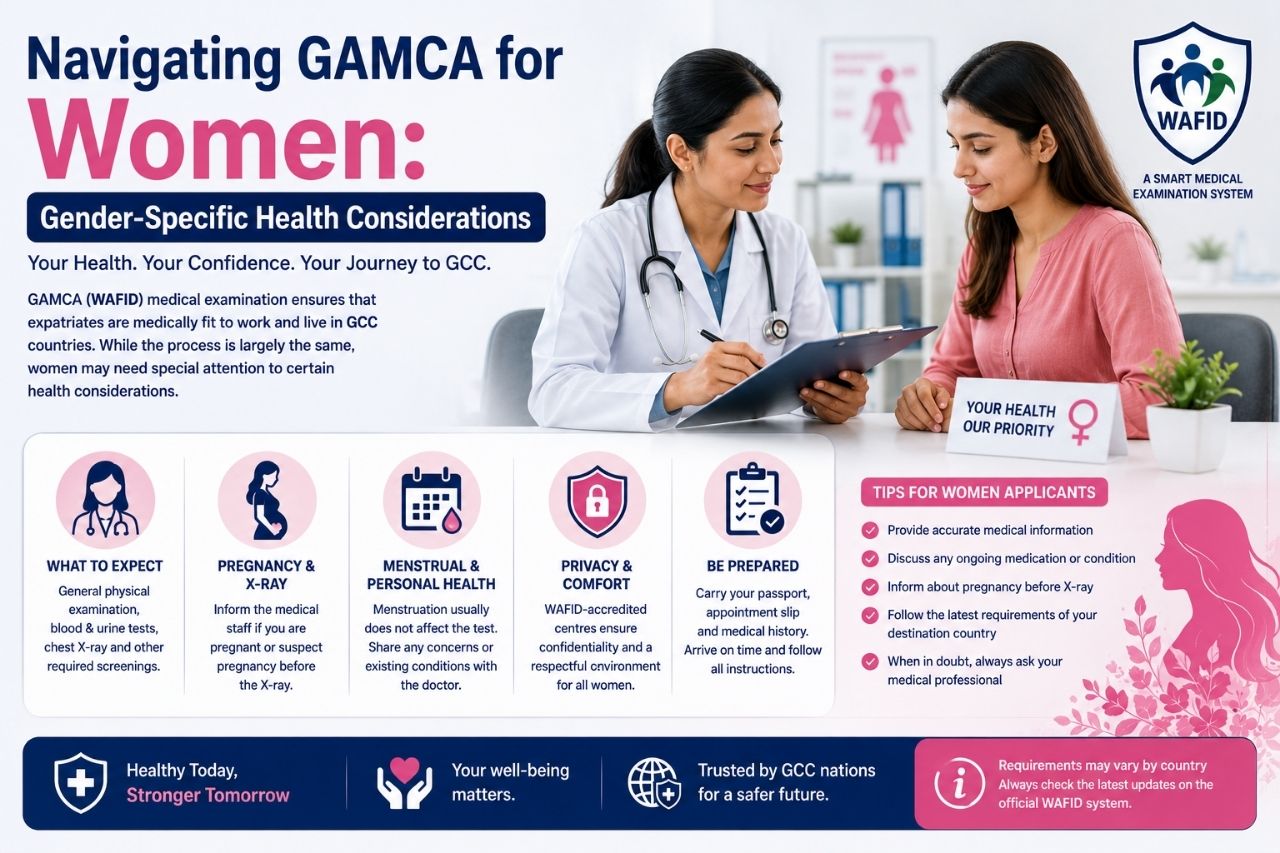
Women travelling to GCC countries for employment or residence may have questions about how the GAMCA medical examination applies to them. GAMCA is now commonly referred to as the GAMCA medical examination system, operated under the Gulf Health Council. The examination is designed to assess whether applicants meet the applicable health requirements before travelling to GCC countries.
While many parts of the medical examination are the same for men and women, female applicants may need to consider certain gender-specific health issues, particularly pregnancy and reproductive health.
The standard medical assessment can include a general clinical examination, laboratory investigations and radiological screening. The official GAMCA regulations include measurements such as height, weight and blood pressure, along with examination of different body systems.
Women should provide accurate information about their medical history, existing conditions and any ongoing treatment. The GAMCA appointment system itself collects information such as gender, marital status, date of birth, nationality and passport details during registration.
Pregnancy is one of the most important issues female applicants should discuss with the medical centre before undergoing the examination. A chest X-ray is part of the medical screening framework, particularly for detecting abnormalities associated with tuberculosis and other lung conditions.
If an applicant is pregnant or believes she may be pregnant, she should inform the medical staff before any X-ray examination. This allows the healthcare professionals to determine the appropriate procedure and follow applicable safety protocols. Applicants should not hide a possible pregnancy from the medical team.
Importantly, the effect of pregnancy on visa or medical-fitness eligibility can depend on the destination country, visa category and applicable regulations. Therefore, women should confirm the latest requirements for their specific GCC destination rather than relying on general information.
Women may also wonder whether menstruation affects the GAMCA medical examination. Routine screening generally focuses on the tests and examinations required under the applicable medical regulations. If menstruation could affect a particular sample or if an applicant has an ongoing gynaecological health concern, it is advisable to inform the medical staff.
Women with conditions such as abnormal bleeding, previous surgeries, hormonal disorders or other reproductive-health concerns should provide relevant medical information when asked. The medical centre can then determine whether additional evaluation is appropriate.
Medical examinations involve personal health information, so applicants should feel comfortable communicating relevant concerns with the healthcare professionals conducting the examination. GAMCA-accredited medical centres are required to meet defined requirements covering areas such as clinical examination, sample collection, laboratory services and radiology.
Women can also ask the medical staff about any procedure they do not understand before it is performed. Clear communication can make the examination more comfortable and help prevent misunderstandings.
Female applicants should carefully check their GAMCA appointment information and ensure that their personal details match their passport. GAMCA advises applicants to visit the assigned medical centre as soon as possible after generating their examination slip.
It is also useful to inform the medical centre in advance about pregnancy, significant medical conditions or medications that may be relevant to the examination.
Navigating the GAMCA medical examination as a woman does not need to be stressful. Most of the screening process follows the same medical framework used for applicants generally, but pregnancy and certain women’s health considerations may require additional attention.
The most important steps are to provide accurate information, communicate openly with medical professionals, disclose a possible pregnancy before an X-ray and check the requirements applicable to the destination country and visa category.
Because GCC medical regulations and procedures can change, applicants should always verify the latest requirements through the official GAMCA system or their authorised medical centre before attending their examination.