
Mon to Sat 07 am to 06 pm
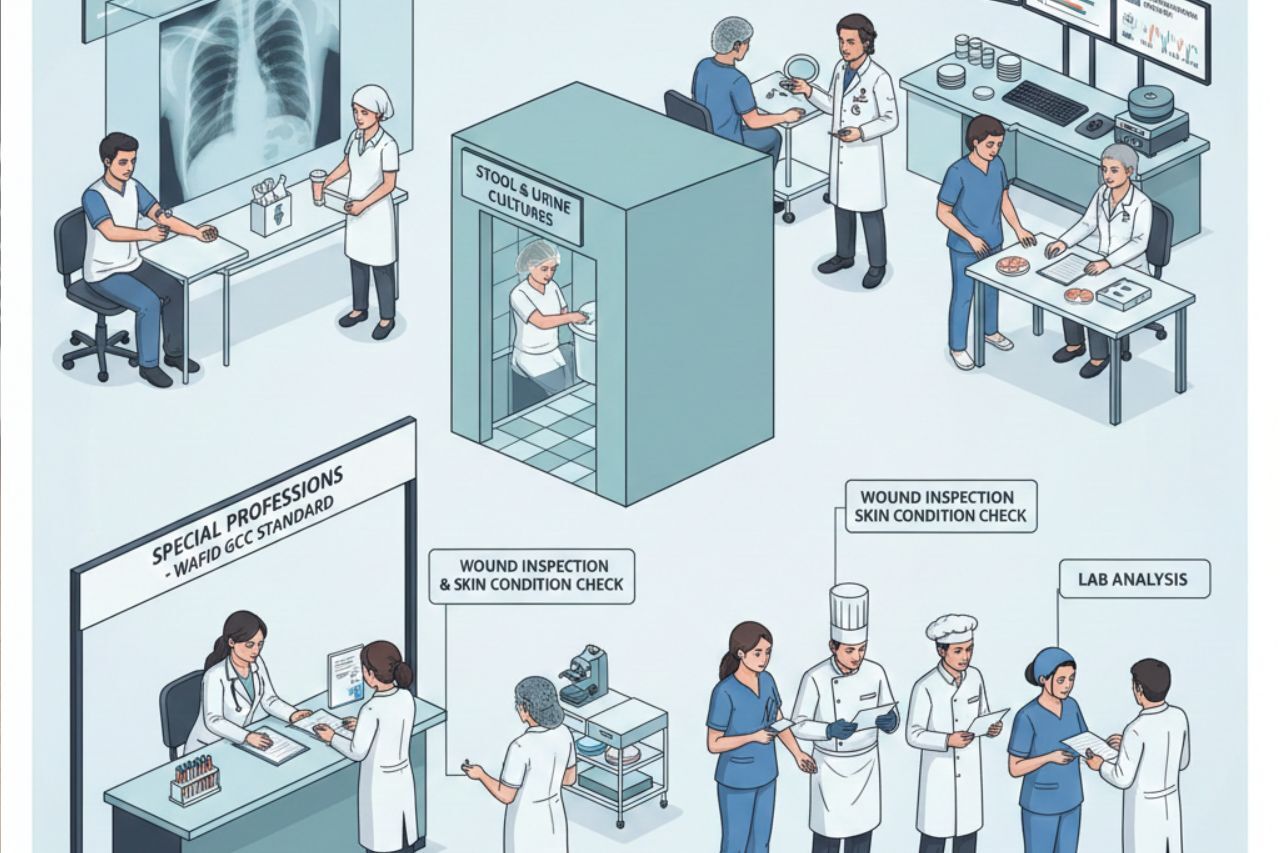
Because they directly affect public health and safety, several professions are subject to more stringent medical inspections. Before being hired, people in industries including healthcare, food handling, childcare, and sanitation must fulfill certain medical requirements, particularly in Gulf nations. To prevent delays, rejections, or compliance problems, it is crucial to comprehend these medical regulations for distinct professions.
Professionals who work in food services, healthcare, or related professions have direct contact with vulnerable communities, food products, and patients. Authorities mandate increased medical screening for these positions in order to stop the spread of infectious diseases and guarantee worker safety.
In addition to being a prerequisite for a visa, medical fitness serves as a public health precaution.
Doctors, nurses, laboratory technicians, and other healthcare workers must undergo comprehensive medical examinations before employment. These typically include:
Blood tests for infectious diseases
Chest X-ray
Vision assessment
General physical examination
Healthcare professionals may also be required to demonstrate immunity or vaccination status, depending on the destination country and role.
Food handlers, including cooks, kitchen staff, bakers, and food processing workers, are subject to strict medical screening to prevent foodborne illnesses. Medical rules often include:
Tests for communicable diseases
Stool examinations (in some cases)
General fitness assessment
A medical clearance confirms that the individual does not pose a health risk to consumers.
Teachers, daycare staff, and childcare workers may face additional health checks due to their interaction with children. Medical examinations focus on:
Infectious disease screening
Overall physical and mental fitness
Some employers may also request vaccination records as part of the hiring process.
Sanitation workers, cleaners, and waste management staff may undergo medical evaluations to assess their ability to work safely in physically demanding or high-exposure environments. Tests may include:
General health screening
Respiratory assessments, if required
During the examination, candidates for specific professions are required to honestly state any current medical issues. Medical information concealment may result in future work problems, visa revocation, or disqualification.
Depending on the demands of the profession and the results of the medical examination, controlled and well-managed conditions may be permitted.
Medical reports for special professions are usually valid for a limited period and must be submitted within the required timeframe. Employers may also request periodic medical re-examinations after employment begins.
Failure to meet medical requirements or submitting false reports can result in:
Visa rejection
Employment termination
Legal or regulatory penalties
Applicants should strictly follow official medical procedures.
The public's health and occupational safety are the goals of medical regulations for certain professions. Stricter medical screening regulations apply to professionals in childcare, food handling, healthcare, and related fields. Candidates can guarantee a seamless job and visa process by comprehending and following these regulations.