Mon to Sat 07 am to 06 pm
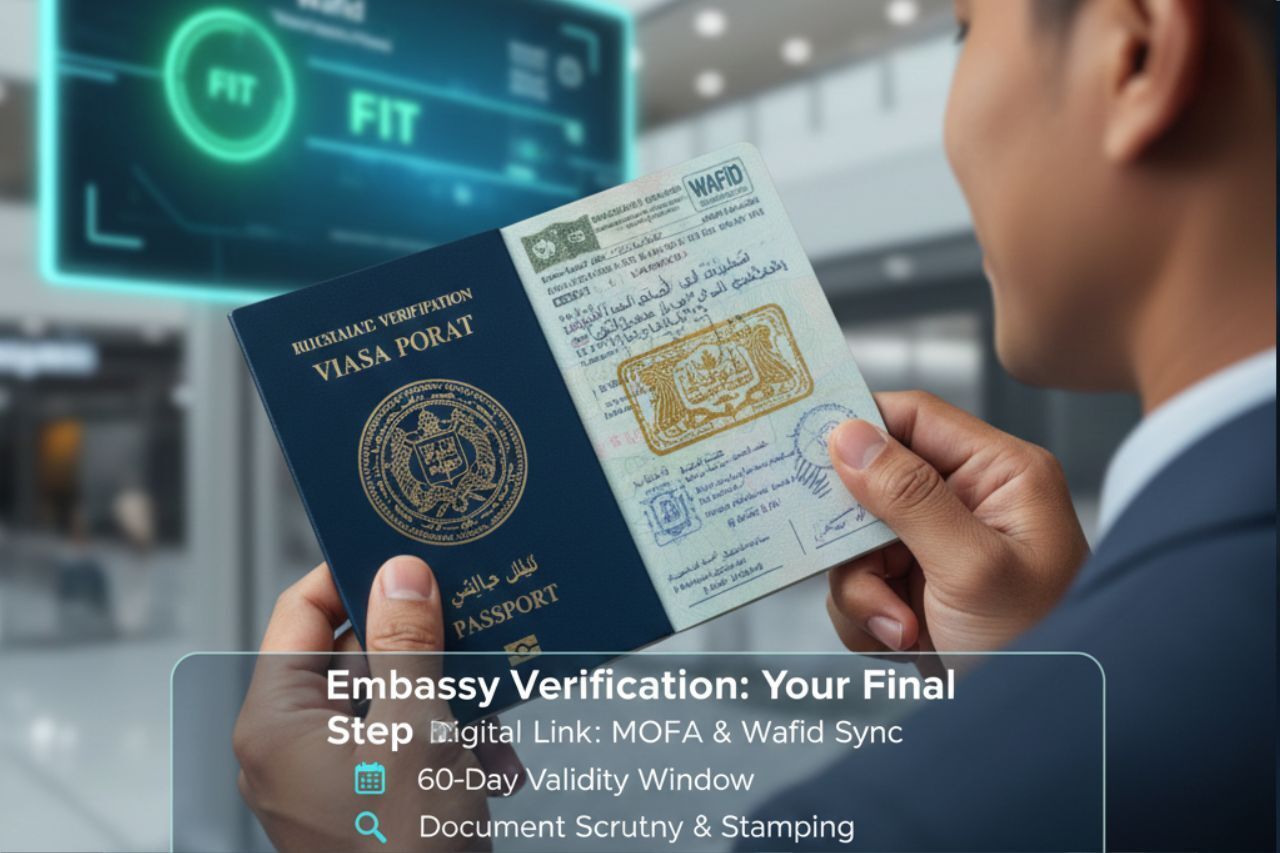
For individuals planning to work in GCC countries, passing the GAMCA medical test is a crucial step. However, many applicants are unaware that embassy verification plays an important role in validating GAMCA medical clearance. Even after receiving a “Fit” status, embassy-level checks can influence how smoothly your visa process moves forward.
This article explains what embassy verification is, how it connects with GAMCA medical clearance, and why it matters for your GCC visa approval.
Embassy verification is the process through which a GCC country’s embassy or consulate verifies an applicant’s documents before visa stamping. This includes:
Passport details
Employment visa or job offer
Medical fitness status GAMCA
Background or security checks
The embassy ensures that all submitted information is authentic, accurate, and compliant with national regulations.
Common searches:
Embassy verification for the Gulf visa
GAMCA medical embassy verification
GCC visa verification process
Once you complete your medical test at a GHC-approved GAMCA medical center, your results are:
Uploaded to the Gamca system
Digitally linked to your passport number
Accessible to relevant GCC embassies
There is no need to carry a physical medical report, as embassies rely on the official digital system for verification.
Even if your GAMCA status is marked “Fit”, embassy verification is essential because it:
Confirms the authenticity of your medical clearance
Ensures the test was done at an authorized center
Matches medical data with visa and passport details
Any mismatch or inconsistency can lead to delays or rejection.
Differences in:
Name spelling
Passport number
Date of birth
can cause the embassy to question the validity of the medical clearance.
A GAMCA medical report is valid for 3 months. If the embassy submission is delayed beyond this period, the medical clearance may be rejected.
Medical clearance is country-specific. If the embassy finds that:
The medical was done for a different GCC country.
The job category does not match.
The clearance may be considered invalid.
Embassies may cross-check:
Past unfit results
Medical bans
GAMCA blacklisting records
This can impact final visa approval.
In general, embassies do not change medical results, but they can:
Reject visa processing if discrepancies are found.
Ask for a re-medical examination.
Put the application on hold.
Medical fitness decisions remain with the authorized medical system, but embassy verification determines whether the clearance is accepted for visa stamping.
To avoid issues:
Double-check your passport and personal details before GAMCA registration.
Complete visa stamping within the medical validity period
Use only authorized medical centers.
Avoid agents offering shortcuts or fake assurances.
Recruitment agencies often act as intermediaries by:
Submitting documents to embassies
Coordinating between the employer, the applicant, and the embassy
Ensuring medical clearance matches visa requirements
Choosing a reliable agency helps prevent errors.
If delays occur:
Confirm your medical status on the Gamca portal.
Check for document mismatches.
Coordinate with your employer or agent.
Be prepared for re-medical if required.
Embassy verification plays a critical role in validating GAMCA medical clearance during the GCC visa process. While passing the GAMCA medical test is essential, ensuring accuracy, timely submission, and compliance with embassy requirements is equally important. Understanding how embassy checks work can help you avoid delays and move confidently toward visa stamping and overseas employment.