
Mon to Sat 07 am to 06 pm
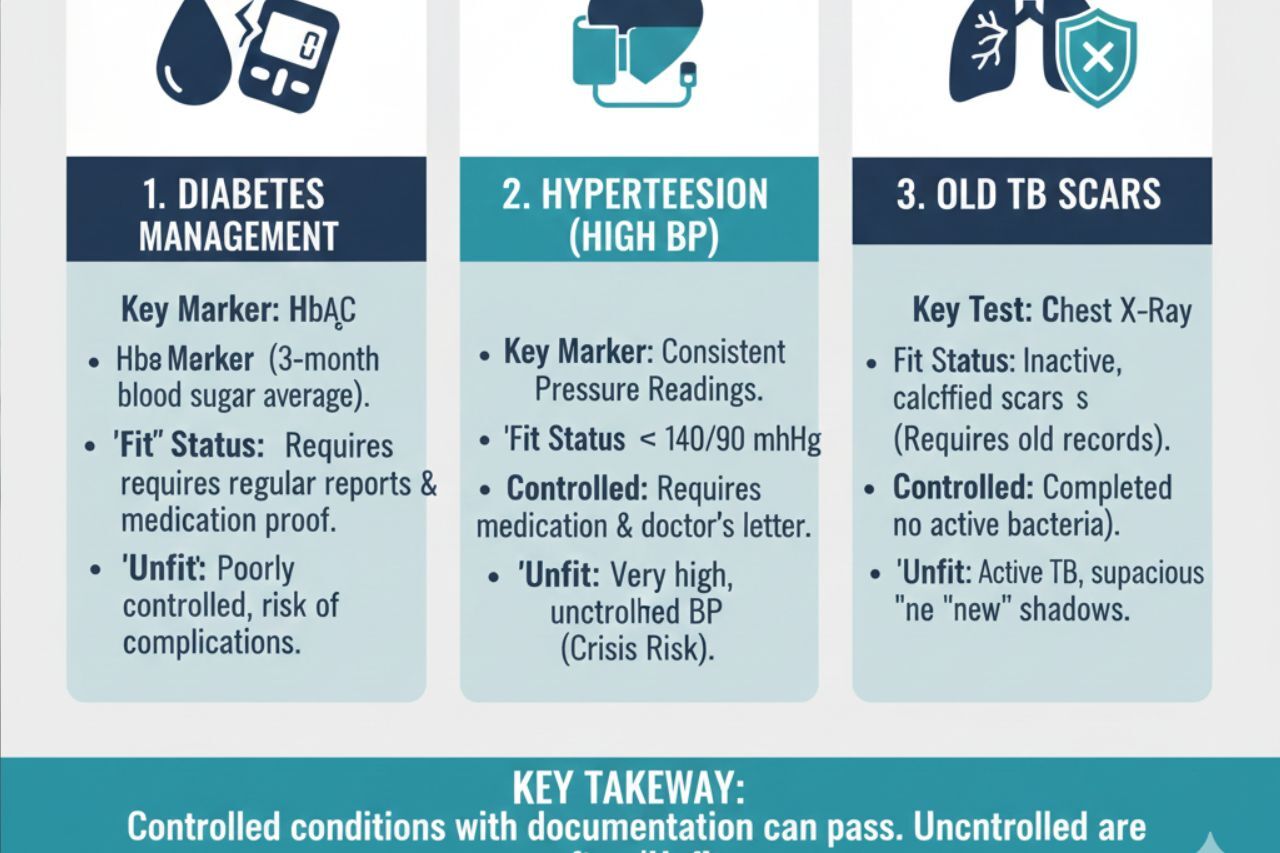
GAMCA (Gulf Approved Medical Centers Association) medical examinations are a mandatory requirement for individuals applying for employment visas to GCC countries. One of the most common concerns among applicants is how chronic medical conditions—such as diabetes, hypertension, asthma, or heart disease—are evaluated during the GAMCA medical process. Unlike routine health check-ups, GAMCA medical assessments are not focused on treatment or disease management but on medical fitness for employment and public safety.
This article explains how chronic conditions are evaluated under GAMCA medical standards, what factors influence fitness decisions, and what applicants should realistically expect.
Purpose of Evaluating Chronic Conditions Under GAMCA
GCC countries require GAMCA medical screening to ensure that incoming
workers:
Do not pose a public health risk
Are physically and mentally capable of performing their job roles
Are unlikely to place an excessive burden on healthcare systems
Can work safely in demanding environments
Chronic conditions are therefore evaluated based on risk, stability,
and functional impact, not merely on diagnosis.
General Approach to Chronic Conditions
Under GAMCA medical standards, chronic illnesses are assessed using
three key criteria:
Severity of the condition
Level of control or stability
Impact on job performance and safety
A chronic condition does not automatically result in unfitness.
However, uncontrolled, progressive, or high-risk conditions are more
likely to lead to rejection.
Evaluation of Common Chronic Conditions
Diabetes Mellitus
Diabetes is one of the most frequently evaluated chronic conditions
under GAMCA.
Assessment factors include:
Blood sugar levels at the time of examination
Evidence of complications (neuropathy, kidney disease, vision
problems)
Dependence on insulin for control
Applicants with well-controlled diabetes and no complications may be
considered fit for certain job categories. However, uncontrolled
diabetes or diabetes with complications often results in unfitness,
especially for physically demanding or safety-sensitive roles.
Hypertension (High Blood Pressure)
Hypertension is assessed based on:
Current blood pressure readings
Response to medication
Evidence of organ damage
Mild, controlled hypertension may be acceptable for low-risk jobs.
However, uncontrolled or severe hypertension can lead to unfitness due
to the risk of cardiac events, particularly in high-stress or manual
labor roles.
Asthma and Respiratory Conditions
Respiratory conditions are evaluated with particular caution.
Key considerations include:
Frequency and severity of symptoms
Need for regular medication or inhalers
History of hospitalizations
Applicants with mild, well-managed asthma may be approved for certain
roles, while those with frequent attacks or limited lung function are
often declared unfit, especially for dusty, industrial, or outdoor
jobs.
Cardiac Conditions
Heart-related conditions are among the most strictly evaluated under
GAMCA standards.
Assessment focuses on:
History of heart disease or surgery
Abnormal ECG findings
Risk of sudden cardiac events
Even controlled cardiac conditions may result in unfitness if the job
involves physical exertion, heat exposure, or long working hours.
Kidney and Liver Disorders
Chronic kidney or liver conditions are evaluated through blood and
urine tests.
Factors leading to unfitness include:
Abnormal kidney function markers
Evidence of chronic liver disease
Risk of progression requiring long-term treatment
These conditions are often considered incompatible with overseas
employment due to potential medical emergencies and treatment needs.
Musculoskeletal Disorders
Chronic back pain, joint disorders, or mobility limitations are
assessed based on functional ability.
Applicants may be declared unfit if the condition:
Limits physical movement
Increases the risk of workplace injury
Conflicts with the physical demands of the job
This is especially relevant for construction and industrial roles.
Importance of Job Category in Fitness Decisions
GAMCA medical outcomes are closely tied to the job title and job risk
level. A condition that may be acceptable for an office-based role
could result in rejection for:
Construction workers
Drivers
Machine operators
Security personnel
Accurate job classification during registration is critical to fair
evaluation.
Disclosure and Medical Documentation
Applicants are expected to disclose known chronic conditions honestly.
Non-disclosure can result in:
Additional investigations
Permanent unfitness if discovered later
Loss of trust in future applications
While GAMCA does not typically allow personal medical reports to
override findings, truthful disclosure helps prevent allegations of
misrepresentation.
Limited Scope for Re-Test or Appeal
For chronic conditions:
Re-tests are generally limited
Appeals are rarely successful unless initial findings were
incorrect
Medical decisions prioritize long-term risk over short-term
stability
Applicants should be cautious of agents claiming guaranteed clearance
for chronic illnesses.
Conclusion
Under GAMCA medical standards, chronic conditions are evaluated based
on control, severity, and occupational risk, not personal comfort or
treatment availability. While some well-managed conditions may be
acceptable for low-risk roles, uncontrolled or high-risk chronic
illnesses often result in unfitness due to safety and public health
considerations.
Applicants with chronic conditions should approach the GAMCA medical
process with realistic expectations, honest disclosure, and an
understanding that medical fitness decisions are regulatory, not
negotiable. Compliance and transparency remain the safest path for
long-term overseas employment eligibility.