
Mon to Sat 07 am to 06 pm
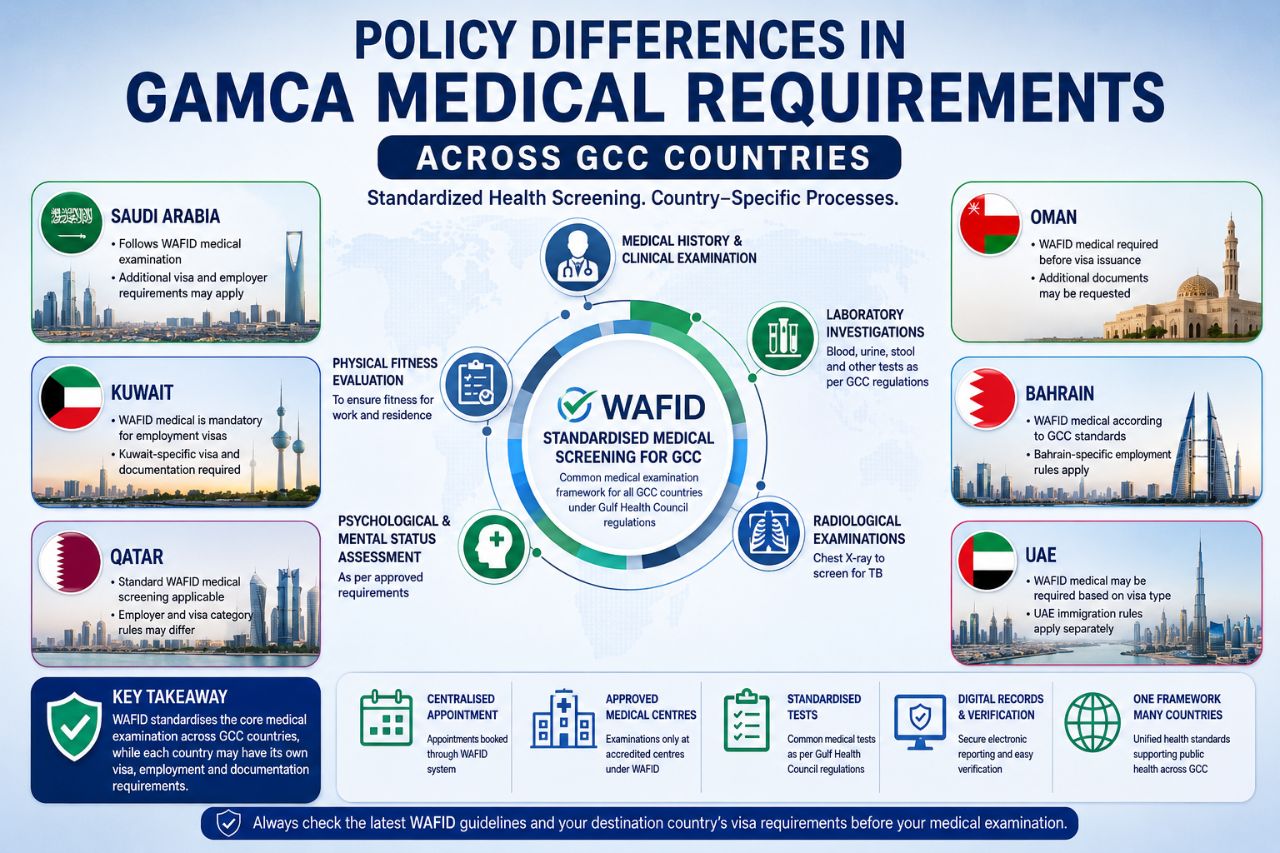
GAMCA medical requirements have long been associated with the pre-departure health screening process for workers travelling to Gulf Cooperation Council (GCC) countries. Today, this process is managed through the WAFID program under the Gulf Health Council. Although the core medical examination framework is designed to provide standardised screening across GCC countries, applicants may encounter differences in destination-specific visa procedures, documentation, employment requirements, and administrative processes. Understanding these distinctions can help applicants prepare correctly for their GCC medical examination.
The term “GAMCA medical” is still widely used by applicants searching for information about GCC medical examinations, particularly in India. However, WAFID is the current electronic platform under the Gulf Health Council through which applicants book medical appointments and access examination-related services. The program applies to individuals travelling to GCC countries for employment or residence.
The WAFID framework was created to establish common health requirements for expatriates and to support the health security of GCC communities. The Gulf Health Council’s regulations define the responsibilities of the Council, GCC health ministries, embassies and consulates, and accredited medical centres.
The core medical screening framework is largely standardised rather than being completely different for Saudi Arabia, Kuwait, Qatar, Oman, Bahrain, and the UAE. The WAFID regulations establish common requirements for expatriate medical examinations, including medical history, clinical examination, laboratory testing, and psychological and mental-status assessment.
However, standardisation does not mean that every part of the visa process is identical. Destination countries can have their own immigration procedures, employment-related requirements, document requirements, and post-arrival processes. Applicants should therefore distinguish between the standardised WAFID medical examination and other requirements imposed by the destination country’s authorities.
The GCC established a coordinated expatriate medical screening framework to protect public health and ensure that individuals entering the region for work or residence meet applicable health and fitness requirements. The Gulf Health Council explains that the program focuses particularly on preventing diseases that could pose risks to the wider Gulf community.
A common framework also makes it easier for GCC authorities to process medical information from applicants examined in different countries. Instead of every destination country operating a completely separate pre-departure medical system, WAFID provides a shared regulatory structure.
Saudi Arabia is one of the major destinations covered by the WAFID medical examination system. Applicants travelling to Saudi Arabia for employment or residence must follow the applicable WAFID appointment and medical examination process before proceeding with the relevant visa procedures.
The medical examination itself follows the GCC framework rather than being treated as an entirely separate medical program. However, applicants should also check Saudi-specific visa and employment documentation requirements because these may exist separately from the WAFID medical examination.
Applicants travelling to Kuwait may also need to complete the WAFID medical examination as part of their pre-departure process. The same broader GCC medical examination framework applies, including the required medical history, clinical assessment, laboratory investigations, and other examinations specified by the regulations.
The important distinction is that completing a WAFID medical examination does not necessarily mean that every other Kuwait visa requirement has been fulfilled. Applicants should separately verify the requirements applicable to their employment category and visa application.
Qatar-bound applicants must follow the applicable WAFID process when their circumstances fall within the program’s requirements. The standardised medical framework helps ensure that applicants are screened using established GCC requirements before travel.
Applicants should nevertheless check whether their employer, visa category, or Qatari authorities require additional documentation or procedures. These requirements should not be confused with the core WAFID medical examination.
Oman is another GCC destination covered by the expatriate medical screening framework. Applicants should complete their WAFID medical appointment according to the instructions provided through the official system and attend the medical centre assigned through their appointment.
As with other GCC destinations, the WAFID examination is only one component of the wider employment or residence process. Additional immigration, employment, or document requirements may apply depending on the applicant’s circumstances.
Applicants travelling to Bahrain for employment or residence may also be subject to the WAFID medical examination requirements. The standardized framework is intended to provide consistent pre-departure screening before expatriates enter GCC countries.
Applicants should verify any Bahrain-specific visa or employment requirements separately. This is important because destination-country administrative rules can change independently of the underlying WAFID medical examination framework.
The UAE is also part of the GCC, but applicants should be careful when interpreting online information about “GAMCA medical for UAE.” The exact medical and immigration procedure applicable to an individual depends on the relevant visa and employment circumstances.
The WAFID program provides a GCC expatriate medical screening framework, but applicants should confirm whether their specific UAE visa category and situation requires a WAFID examination and whether any additional UAE procedures apply.
The WAFID regulations establish a structured examination framework rather than allowing every medical centre to create its own list of tests. The medical examination includes medical history, clinical examination, laboratory tests, and psychological and mental-status examinations.
The regulations also identify medical conditions and examination findings that can affect medical fitness. These include certain infectious diseases, significant abnormalities identified through examination or laboratory investigations, and other health conditions specified under the applicable regulations. Applicants should rely on the current official regulations rather than outdated lists published on unofficial websites.
One area where applicants can encounter differences is documentation. The WAFID system requires applicants to enter information such as nationality, passport details, destination country, and other required information during appointment booking. The official FAQ also notes that certain nationality-specific information may be required in particular cases.
Additional documents may be requested by an employer, immigration authority, embassy, consulate, or destination-country authority. Therefore, applicants should not assume that their WAFID medical slip represents the complete set of documents required for their visa application.
The medical centre assignment process is centralised through WAFID. Applicants select the country and city where the examination will take place along with their destination country, and the medical centre is assigned automatically according to the WAFID system. Applicants cannot simply choose any medical centre they prefer.
This arrangement helps maintain the use of approved medical centres and supports a standardised screening process. The exact availability of centres can differ according to the country and city selected by the applicant.
Although the underlying medical requirements are standardised, the practical experience can vary depending on where the examination is conducted. Applicants may have different medical centre options depending on the city selected for their examination.
WAFID maintains a medical centre network and provides a medical-centre listing through its platform. Applicants should verify that their assigned facility is part of the approved network before attending their examination.
The Gulf Health Council has a central role in defining and administering the expatriate medical screening framework. The regulations state that the Council determines health conditions for expatriates coming to GCC countries for work or residence, accredits medical examination centres, monitors their technical and administrative work, and continuously develops the electronic system.
GCC health ministries also have responsibilities within the framework. This creates a coordinated structure in which the regional standards are supported by national health authorities and other relevant institutions.
Digital integration is another important feature of the modern WAFID system. The regulations define an electronic system that links the Gulf Health Council, GCC member states, and accredited health centres. This helps create a standardised method of managing expatriate examination information.
Applicants can also check their medical examination results using their passport number and nationality or their WAFID slip number through the official system.
Many websites continue to publish older information under the term “GAMCA medical requirements.” While some of this information may still describe the general concept of GCC medical screening, specific requirements and procedures can change.
The Gulf Health Council states that the expatriate medical examination list has been updated over time, with the latest update noted on its program page as October 2023. Applicants should therefore check the current WAFID regulations and official instructions rather than relying entirely on older articles or social media posts.
The WAFID framework is designed to assess whether expatriates are medically fit for work or residence, and the regulations refer to fitness to perform job duties. This means the applicant’s employment purpose is relevant to the overall screening framework.
However, applicants should not assume that every profession automatically has a completely separate medical test list. The applicable requirements should be determined from the current WAFID regulations and any additional requirements associated with the specific visa or employment category.
The best approach is to separate the process into two parts. First, complete the applicable WAFID medical examination according to the official booking and medical-centre instructions. Second, verify the destination country’s current visa, employment, immigration, and document requirements separately.
Applicants should ensure that their passport information is entered correctly, carefully review their appointment slip, attend the assigned medical centre, and retain relevant documents and payment records. Checking current official information before the appointment can prevent problems caused by outdated requirements.
The phrase “policy differences in GAMCA medical requirements across GCC countries” can be misleading because the core expatriate medical examination framework is designed to be standardised through WAFID and the Gulf Health Council. The medical screening process covers common requirements intended to assess health and fitness while protecting public health across GCC countries.
At the same time, applicants should recognize that WAFID medical requirements and destination-country visa requirements are not necessarily the same thing. Saudi Arabia, Kuwait, Qatar, Oman, Bahrain, and the UAE can have their own immigration, employment, documentation, and administrative procedures. For this reason, applicants should complete the applicable WAFID medical examination while separately checking the latest requirements of their destination country. This approach provides a more accurate understanding of the GCC medical and visa process and avoids confusion caused by outdated GAMCA information.
The core WAFID medical examination framework is standardised across the GCC. Differences can occur in destination-specific visa, employment, immigration, documentation, and administrative requirements.
WAFID is the current platform associated with the GCC expatriate medical examination program. “GAMCA medical” remains a commonly used search term for GCC medical screening.
The core medical examination follows the common WAFID framework. However, applicants should separately verify any additional destination-specific requirements applicable to their visa or employment situation.
The official WAFID FAQ states that applicants cannot choose a specific medical centre. The centre is assigned automatically according to the selected country and city.
Applicants can check their medical examination results through the WAFID system using their passport number and nationality or their WAFID slip number.
Yes. The medical examination framework can be updated. Applicants should check the latest official WAFID regulations and instructions before completing their examination.