
Mon to Sat 07 am to 06 pm
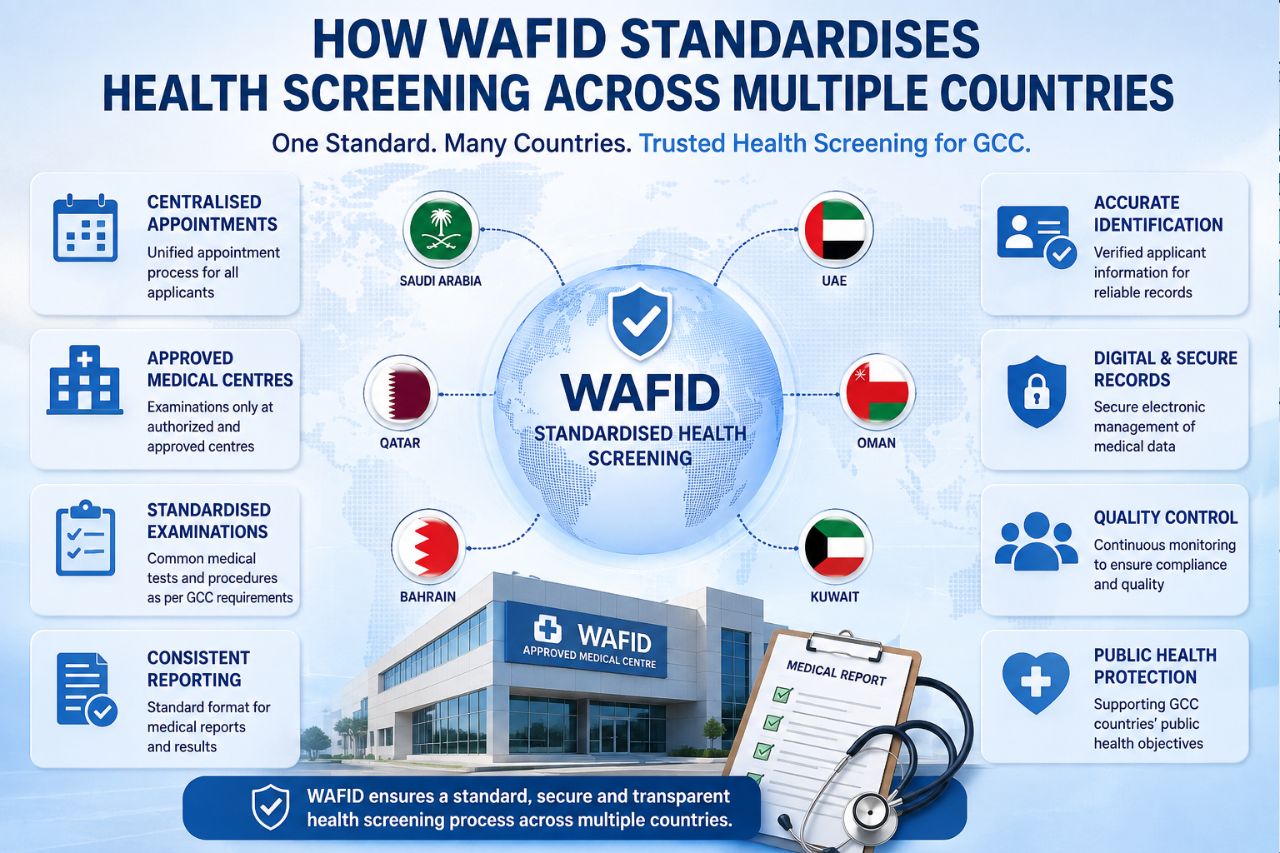
The WAFID medical system has created a more standardized approach to health screening for individuals traveling to Gulf Cooperation Council (GCC) countries for employment or residence. When applicants complete their medical examinations in different countries, maintaining consistency in medical procedures and reporting is essential. WAFID helps establish a centralized framework through which approved medical centres conduct examinations according to defined requirements, allowing medical screening to follow a more consistent process across participating locations.
WAFID is the electronic system used for managing medical examinations for expatriates traveling to GCC countries for work or residence. It provides a structured process for appointment management and medical examination procedures through approved medical centres.
The system is particularly important for applicants from countries such as India, Bangladesh, Pakistan, Nepal, the Philippines, and other locations where large numbers of workers travel to GCC countries. A standardized system allows applicants to complete the required medical screening under a common framework rather than following completely different processes in every country.
GCC countries receive workers from many different parts of the world. If medical examinations were conducted according to completely different procedures in each country, comparing and verifying results could become more difficult.
Standardised medical screening creates a common framework for applicants and medical centres. It helps ensure that the required examinations are performed according to established requirements and that medical information is recorded in a consistent manner.
One of the key ways WAFID supports consistency is through defined medical examination requirements. Applicants are assessed according to the applicable GCC medical examination regulations rather than being subjected to entirely different screening standards based solely on the country where they undergo the examination.
The required screening can include clinical assessment, laboratory investigations, radiological examinations, and other medical evaluations specified under the applicable regulations. The exact requirements can depend on the current rules and the applicant’s circumstances.
Standardisation also depends on the facilities conducting the examinations. WAFID operates through approved medical centres that are authorised to perform expatriate medical examinations under the applicable framework.
Using approved centres helps establish greater control over the medical screening network. These facilities are expected to follow the relevant examination and reporting procedures rather than creating their own independent standards for GCC-bound applicants.
The appointment process is another important part of standardisation. WAFID provides a centralized electronic mechanism through which applicants arrange their medical examination.
Centralised appointment management creates a more consistent pathway from registration to examination. It also connects the applicant’s booking information with the medical centre assigned through the system, helping maintain continuity throughout the process.
Medical screening is closely connected to the applicant’s identity and travel documents. Information such as the name, passport number, nationality, and other identification details needs to be recorded accurately.
A standardised digital process makes accurate identification an important part of the medical examination workflow. Applicants should therefore enter their information exactly as it appears on their passport and verify their details before completing the appointment process.
Medical examination results need to be recorded in a structured manner so they can be processed and reviewed through the relevant system. Standardised reporting helps reduce variations in how information is presented by different medical centres.
Consistent reporting is especially important when applicants are examined in different countries but are ultimately travelling to GCC destinations. It allows medical information to be handled within a common framework rather than relying on completely different local reporting formats.
The move toward electronic medical screening has further improved standardisation. Digital systems can organise appointment information, applicant records, and medical examination data more systematically than purely paper-based processes.
Electronic records also make it easier for authorised parties to access and verify information when required. Applicants should keep their appointment details and other relevant documents available throughout the medical and visa process.
Standardised health screening requires medical centres to follow established requirements consistently. The WAFID framework supports this by limiting examinations to approved facilities and maintaining requirements for participation in the program.
Quality control is important because applicants may complete their medical examinations in different countries. A common framework helps reduce unnecessary differences in examination procedures and reporting between participating facilities.
The purpose of standardised GCC medical screening extends beyond visa administration. Pre-departure medical examinations also support public health objectives by identifying health conditions covered by the applicable GCC medical regulations before applicants travel.
A coordinated screening framework allows participating GCC countries to apply common medical requirements to expatriate applicants while maintaining their broader public health safeguards.
Without standardisation, applicants from different countries could potentially undergo substantially different medical screening processes. WAFID helps reduce this variation by establishing a centralised framework and common medical requirements.
For example, an applicant completing a WAFID medical examination in India and another applicant completing one in another participating country can follow the same overall framework for their GCC medical screening. The specific medical centre, appointment availability, and local administrative details may differ, but the underlying requirements are standardised through the applicable WAFID regulations.
Standardisation makes the medical examination process easier to understand for applicants. Instead of having to determine which medical tests or facilities are acceptable independently, applicants can follow the WAFID process and attend an approved medical centre assigned through the appointment system.
This can also reduce confusion for applicants who have never previously completed a GCC medical examination. Following the official process helps ensure that their examination is conducted through an appropriate facility and recorded within the relevant system.
Medical centres play a critical role in implementing WAFID requirements. Their responsibilities include verifying applicant information, conducting the required examinations, recording medical findings, and processing the relevant information through the designated system.
The effectiveness of standardization therefore depends not only on the central framework but also on how consistently individual medical centres follow the applicable requirements.
Standardised medical screening is only effective when applicant information is accurate. Incorrect passport numbers, names, dates of birth, or other personal details can create discrepancies even when the medical examination itself has been completed correctly.
Applicants should carefully check their information at every stage. Any discrepancy should be addressed through the appropriate medical centre or official support process rather than attempting to create a new record unnecessarily.
The development of WAFID reflects the broader move toward centralised digital administration of expatriate medical screening. The system provides a more organised framework than older processes that relied more heavily on physical documents and decentralised arrangements.
The term “GAMCA medical” is still widely used in India and other countries when people search for GCC medical examinations. However, applicants should understand that WAFID is the current platform associated with the GCC expatriate medical examination process and should rely on current official procedures.
The overall medical screening framework can be standardised while certain administrative details vary by country. Applicants may experience differences in available appointment slots, medical centre locations, local documentation procedures, and other practical factors.
Therefore, standardization does not necessarily mean that every applicant experiences an identical process in every country. Instead, WAFID provides a common framework within which approved medical centres operate.
As digital healthcare and immigration systems continue to develop, standardised medical screening may become increasingly connected with electronic verification and other government processes. Improvements in data management, security, and digital communication can further support consistency across participating countries.
The core objective remains to ensure that expatriate medical examinations are performed according to established GCC requirements and that medical information can be processed reliably during the visa process.
WAFID standardises health screening across multiple countries by providing a centralised framework for expatriate medical examinations. Approved medical centres operate within defined requirements, while centralised appointment management and structured digital records support greater consistency in applicant identification, examination procedures, and reporting.
For applicants, the most important step is to follow the current WAFID process, provide accurate information, and attend the approved medical centre specified through their appointment. Although local administrative details can vary between countries, the standardized WAFID framework helps create a more consistent medical screening process for individuals traveling to GCC countries for employment or residence.
WAFID supports standardisation through a centralised appointment system, approved medical centres, defined examination requirements, and structured medical reporting procedures.
The underlying medical examination requirements are based on the applicable GCC regulations, but practical and administrative arrangements can vary between countries and medical centres.
Approved centres are authorized to conduct WAFID medical examinations and are expected to follow the applicable medical and reporting requirements.
The WAFID framework uses structured processes for managing medical examination information, helping create consistency in how results are recorded and processed.
Yes. “GAMCA medical” remains a commonly used term when people search for GCC medical examinations, particularly in India. WAFID is the current platform associated with the expatriate medical examination process.
Accurate passport information helps ensure that the medical examination record is associated with the correct applicant and reduces the possibility of verification problems during the visa process.